

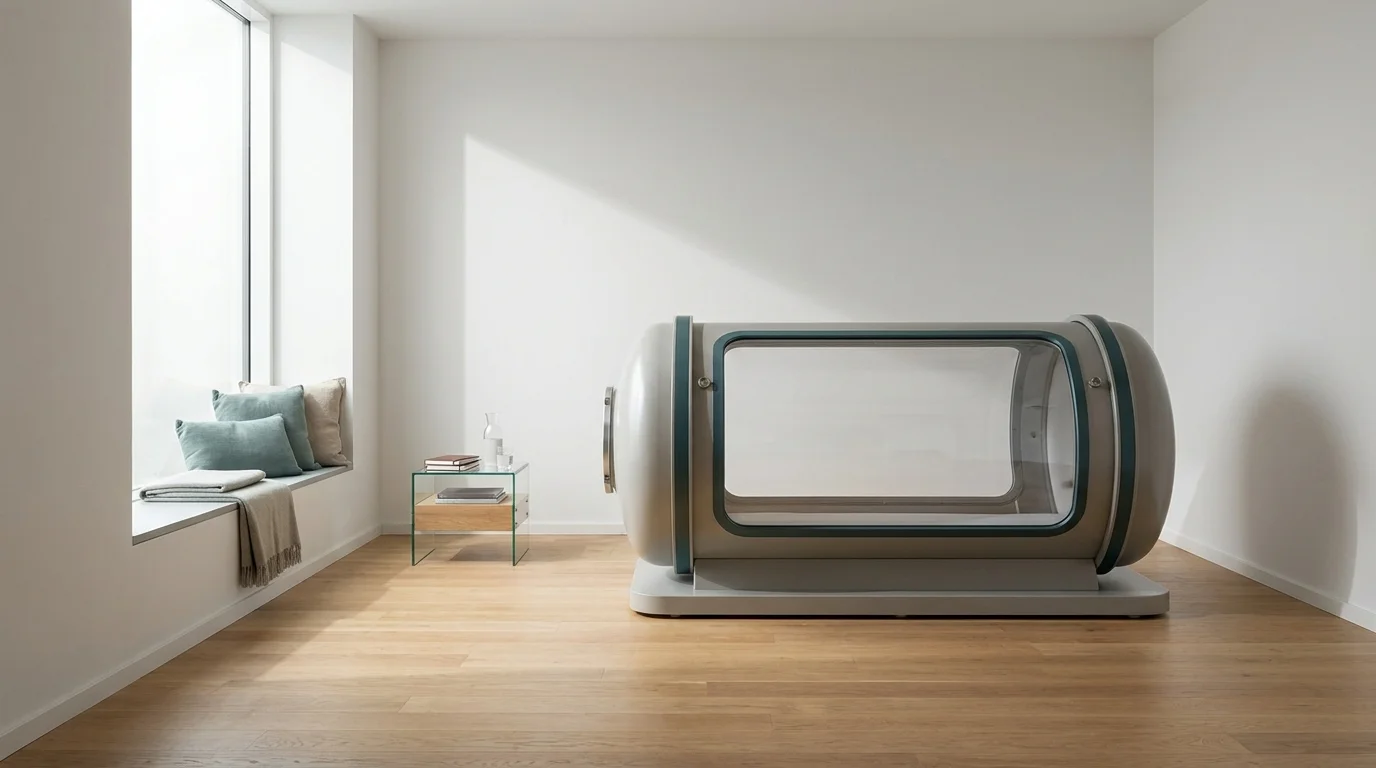
Hyperbaric oxygen therapy used to live almost exclusively in hospital wound-care departments. In the last five years it has moved into longevity studios, recovery suites, and the routines of athletes and biohackers — and the marketing has gotten well ahead of what the published evidence actually supports. This guide separates the two: what HBOT does, where the evidence is strong, where it isn't, and what to expect if you do a course at our Santa Clara studio.
What hyperbaric oxygen therapy is
Hyperbaric oxygen therapy (HBOT) is the medical practice of breathing 100% oxygen inside a sealed chamber pressurized above normal atmospheric pressure — typically 2.0 atmospheres absolute (ATA), the equivalent of being roughly 33 feet underwater. A standard treatment lasts 60–90 minutes at depth.
The combination of increased pressure and 100% oxygen dramatically raises the amount of oxygen dissolved in your blood plasma — well beyond what your hemoglobin alone can carry at sea level. That dissolved oxygen reaches tissues that don't get enough at baseline pressure, including injured tissue, scar tissue, and the periphery of stroke or wound sites.
HBOT is delivered in two chamber types. Hard chambers (used in clinical settings) reach 2.0–3.0 ATA and deliver pure oxygen — this is the dose used in essentially all the published research. Soft (mild) chambers reach only 1.3 ATA and typically deliver concentrated air, not 100% oxygen. The clinical evidence base lives almost entirely on hard chambers; soft chambers are a different (and much weaker) intervention.
How HBOT actually works inside your body
The mechanism rests on Henry's Law: the amount of a gas dissolved in a liquid is proportional to the partial pressure of that gas above the liquid. At normal atmospheric pressure breathing air (21% oxygen), your blood plasma carries a small amount of dissolved oxygen — most of your tissue oxygenation comes from hemoglobin in red blood cells. At 2.0 ATA breathing 100% oxygen, dissolved plasma oxygen rises roughly 10–15× over baseline.
That dramatic increase drives several downstream effects. Foundational physiology research shows HBOT promotes the formation of new blood vessels (angiogenesis) in tissues that have been chronically under-oxygenated, increases stem-cell mobilization from bone marrow, and reduces certain types of inflammation through modulation of nitric oxide and reactive oxygen species pathways.
The most interesting recent mechanism research is the so-called hyperoxic-hypoxic paradox — the observation that fluctuating oxygen levels (high oxygen during HBOT alternating with normal oxygen between sessions) trigger many of the same regenerative pathways as actual hypoxia. This is the framework behind much of the longevity-oriented HBOT research coming out of Israel.
FDA-approved uses vs wellness uses
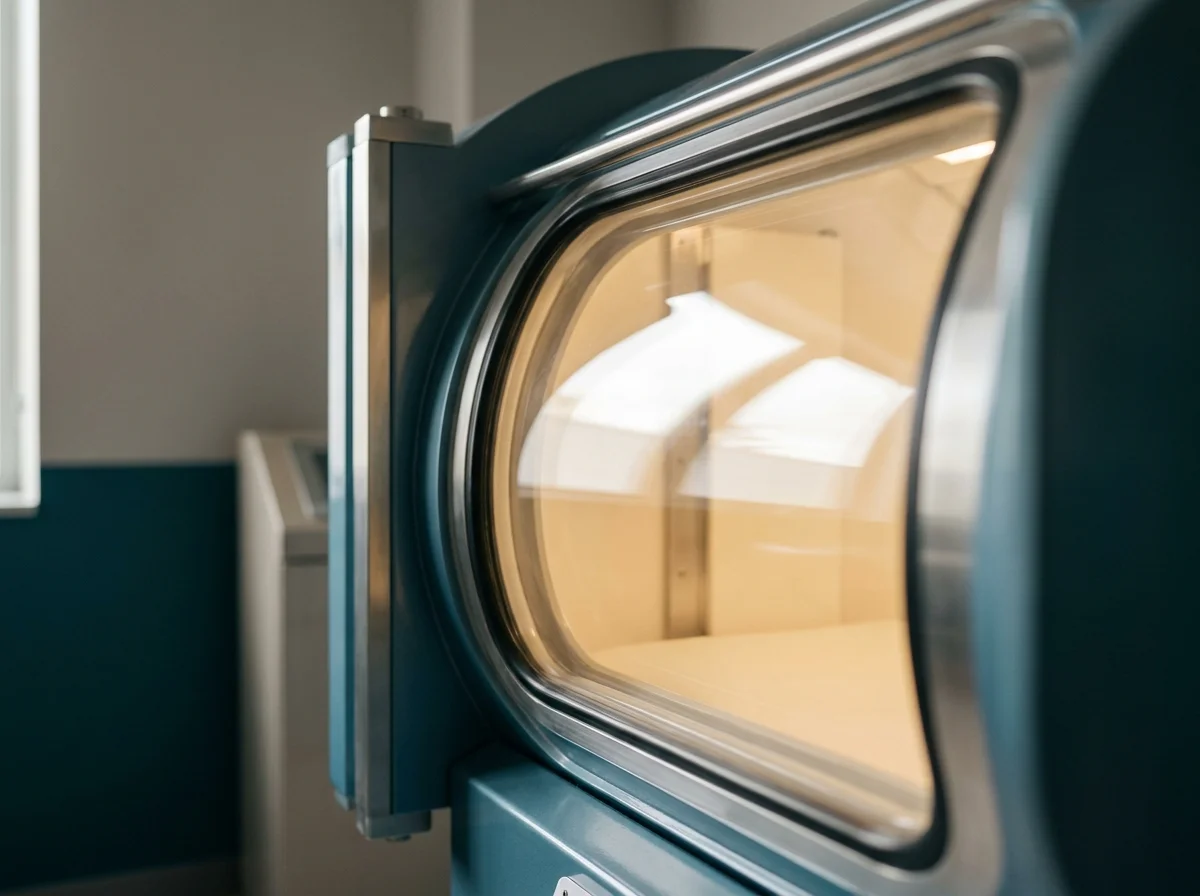
This distinction matters more than almost any other when evaluating HBOT. The FDA has cleared hyperbaric chambers as devices, and clearance for 14 specific medical indications. Anything outside that list is "off-label" — legal, but the device is not FDA-approved for that specific use.
FDA-approved indications
The full list is maintained by the Undersea and Hyperbaric Medical Society and includes air or gas embolism, severe carbon monoxide poisoning, decompression sickness, gas gangrene, crush injuries with compromised circulation, certain non-healing diabetic foot wounds, severe anemia, intracranial abscess, necrotizing soft tissue infections, refractory osteomyelitis, late-effect radiation tissue injury, certain compromised skin grafts and flaps, acute thermal burns, and idiopathic sudden sensorineural hearing loss.
For these uses, the evidence is substantial enough that insurance covers HBOT in most U.S. clinical settings. These are the indications you'll see at hospital wound-care centers.
Off-label / wellness uses
Most of what brings clients to a wellness studio for HBOT falls outside the FDA list. The common ones:
- Post-concussion / mild traumatic brain injury
- General athletic recovery
- Long COVID
- Cognitive performance / brain fog
- Anti-aging and longevity
- Post-surgical recovery acceleration
- Fibromyalgia and chronic pain
The FDA's consumer guidance on HBOT is direct: be skeptical of any provider claiming HBOT cures cancer, autism, Alzheimer's, AIDS, or asthma. The evidence does not support those claims.
What the evidence does support for off-label use is more nuanced — and that's the next section.
HBOT benefits — graded by evidence
Strong evidence (FDA-cleared indications)
Decompression sickness, severe carbon monoxide poisoning, gas embolism, certain non-healing wounds, radiation tissue injury, necrotizing infections, and the other 14 cleared indications listed above. For these, decades of clinical use, randomized trials, and a substantial Cochrane review base support the therapy.
Moderate and emerging evidence (off-label, but real)
- Post-concussion syndrome. A 2013 randomized trial in PLOS ONE showed meaningful improvement in cognition and quality of life in patients years after mild TBI, after 40 HBOT sessions. Subsequent Israeli research has reinforced these findings, though a Cochrane review of HBOT for TBI noted that overall trial quality remains mixed.
- Cognitive enhancement in aging adults. A 2020 randomized trial of healthy older adults found measurable cognitive improvements and brain blood flow changes after 60 HBOT sessions over three months.
- Wound healing in non-cleared contexts. Surgical recovery and certain chronic wounds outside the FDA list show benefit in smaller studies.
- Fibromyalgia symptom reduction. Several Israeli randomized trials, summarized by Efrati and colleagues, show meaningful improvement in pain and quality of life metrics.
Weak or insufficient evidence
- General "anti-aging" beyond the cognitive findings. The mechanistic story is interesting but human longevity outcomes are not demonstrated.
- Athletic performance enhancement in healthy athletes. Recovery acceleration shows some signal; performance improvement does not.
- Long COVID. Several small studies show promise; large RCTs are still emerging.
Not supported by current evidence
Cancer treatment, autism, Alzheimer's, multiple sclerosis cure, asthma cure, and chronic Lyme. Reputable providers don't make these claims.
The protocol: depth, duration, frequency
Depth (pressure)
Standard clinical HBOT runs at 2.0–2.4 ATA. Some indications use 2.8 or 3.0 ATA. The Israeli longevity and TBI research has settled on 2.0 ATA as the standard wellness-protocol depth — high enough to drive the hyperoxic effect, conservative enough to limit oxygen toxicity risk.
Duration per session
Sixty to ninety minutes at depth, plus 5–10 minutes each for pressurization and depressurization. Total chamber time is typically 75–110 minutes.
Frequency and total course
The published wellness protocols use 3–5 sessions per week for a course of 20–60 sessions. The Boussi-Gross post-concussion trial used 40 sessions; the Hadanny aging cognition trial used 60. There is no published evidence that occasional single sessions provide lasting benefit. HBOT requires consistent dosing.
Who should not do HBOT
HBOT is generally well-tolerated, but a small list of contraindications matter. Side-effect data shows the most common issues are mild and pressure-related (ear barotrauma in 2–10% of sessions, transient near-sightedness with extended courses, sinus congestion).
Absolute contraindications (do not do HBOT):
- Untreated pneumothorax (collapsed lung) — pressure changes can be catastrophic
- Certain chemotherapy agents (most importantly bleomycin and doxorubicin — risk of severe pulmonary toxicity)
Relative contraindications (clear with your physician first):
- Recent ear, sinus, or chest surgery
- Severe COPD or other obstructive lung disease
- Uncontrolled seizure disorder
- Active upper respiratory infection (postpone the session)
- Pregnancy (data is limited; most clinicians recommend caution)
- Untreated middle-ear pathology that prevents pressure equalization
- Claustrophobia severe enough to require sedation
We screen every new member with a brief medical intake and review your medication list before any first session. If something needs physician clearance, we will tell you so.
HBOT in San Jose: what we run at BMS Wellness
Our hyperbaric program at the Santa Clara studio runs a hard chamber at 2.0 ATA delivering 100% oxygen — the same dose used in the Israeli longevity and TBI research. We deliberately chose 2.0 ATA over higher pressures because that depth has the strongest published evidence base for the wellness applications most members are interested in.
Standard wellness protocols at BMS:
- Recovery / acute injury protocol: 5–10 sessions, 3 per week.
- Cognitive / post-concussion protocol: 40 sessions over 8–10 weeks (matching the Boussi-Gross trial structure).
- Longevity / cognitive maintenance protocol: 40–60 sessions over 12 weeks (matching the Hadanny aging trial), often repeated annually.
- Trial / drop-in: Single 60-minute session — useful for assessing tolerance, but not a therapeutic course.
Most longevity-protocol members stack exercise with oxygen therapy (EWOT) sessions on alternating days for the metabolic and vascular benefits, and pair the program with our red light therapy and PEMF therapy for parallel recovery support. Membership options include unlimited HBOT for members on a longevity track; intro courses are available without a membership commitment.
Hard chambers vs soft chambers — why the distinction matters
The cold reality of the consumer HBOT market is that many home and clinic offerings use soft (mild) hyperbaric chambers — inflatable units that pressurize to 1.3 ATA and deliver concentrated air rather than pure oxygen. These are sometimes marketed as equivalent to clinical HBOT. They aren't.
The dose difference is substantial. At 2.0 ATA on 100% oxygen (a hard chamber), tissue oxygen delivery rises roughly 10–15× over breathing room air at sea level. At 1.3 ATA on enriched air (a soft chamber), the increase is closer to 1.5–2×. The mechanistic effects in the published research — angiogenesis, the hyperoxic-hypoxic paradox, stem cell mobilization — are documented at the higher dose. Most are not documented at the soft-chamber dose.
Soft chambers are not useless, but they are a substantially weaker intervention. If you're choosing a provider, ask whether the chamber is hard or soft, and what depth (in ATA) the protocol uses. A reputable provider will give you an immediate, specific answer.
The bottom line
Hyperbaric oxygen therapy is one of the most well-studied wellness interventions available, partly because it has decades of clinical history in hospital wound care. The mechanisms are real, the FDA-approved indications are well-established, and the wellness applications — particularly post-concussion, cognitive enhancement in aging adults, and recovery from physical injury — are supported by a growing but still mid-stage body of research.
What it isn't: a single-session miracle, a cancer cure, an effortless biohack. Like any therapy backed by a real mechanism, HBOT requires a real protocol — typically 20–60 sessions delivered consistently — and an honest assessment of whether it fits the goal. The published research is strong enough to take it seriously and limited enough that the marketing claims often outrun what the data supports.
If you're considering HBOT in the South Bay and want a straightforward conversation about whether it fits your situation, the team at our studio offers free 15-minute consultations. We'll walk through the evidence for your specific goal, recommend a protocol if HBOT is appropriate, and tell you when something else would serve you better.