Journal
Red Light Therapy: The Science of Photobiomodulation
By BMS Wellness· May 19, 2026
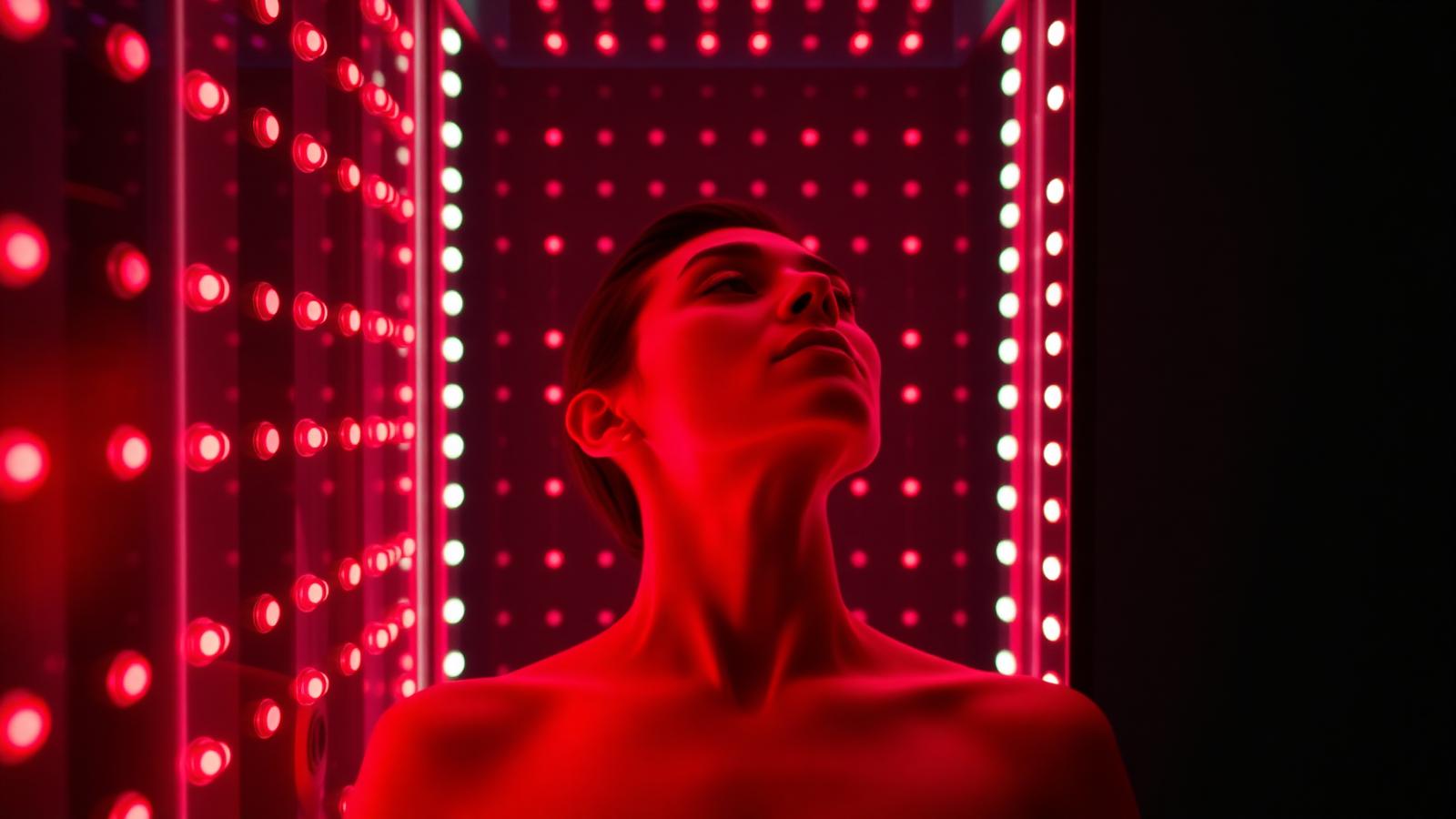
How 660nm and 850nm wavelengths reach your mitochondria, boost ATP, stimulate collagen, and reduce inflammation.
How 660nm and 850nm wavelengths reach your mitochondria, boost ATP, stimulate collagen, and reduce inflammation.
At 660nm and 850nm, red and near-infrared light reach your mitochondria directly — boosting ATP production, stimulating collagen, reducing inflammation system-wide. Over 5,000 peer-reviewed studies confirm what high performers already know.
Red light therapy sounds simple — stand in front of panels, absorb light. But what happens inside your cells during those 20 minutes is anything but simple. It's one of the most researched non-invasive interventions in modern medicine, with over 5,000 peer-reviewed studies and a mechanism of action that is now well understood at the molecular level.
The process is called photobiomodulation (PBM) — and it works through a surprisingly direct pathway. Specific wavelengths of red and near-infrared light are absorbed by a protein inside your mitochondria called cytochrome c oxidase. This protein is the final enzyme in the mitochondrial electron transport chain — the assembly line your cells use to produce ATP, the fundamental unit of cellular energy.
When cytochrome c oxidase absorbs red or near-infrared light, it accelerates the electron transport chain. More electrons move through. More ATP is produced. The cell runs faster, repairs faster, and communicates more efficiently. This is not heat. This is not placebo. It is a specific photochemical reaction at the molecular level.
"Photobiomodulation increases mitochondrial membrane potential and ATP synthesis, reduces oxidative stress, and modulates a host of signaling pathways at the cellular level."— Hamblin MR, Photobiomodulation in the Brain, Academic Press · 2019
Think of it this way: if your mitochondria are a power plant, red light therapy is a turbine upgrade. The same fuel goes in — but the output increases measurably, and the waste products decrease.
Not all light is equal. Red light therapy works only within specific wavelength windows — outside these windows, the photochemical reaction doesn't occur. At BMS, our panels deliver both therapeutic wavelengths simultaneously.
Penetrates skin and superficial tissue. Primary targets: skin cells, collagen-producing fibroblasts, surface inflammation. Most visible effects — skin texture, wound healing, joint pain at the surface.
Penetrates 2–3x deeper than visible red light. Reaches muscle tissue, joints, bones, and the nervous system. Primary targets: deep inflammation, muscle recovery, neuroprotection, and deeper cellular repair.
Direct increase in mitochondrial ATP output — measurably more cellular energy, less fatigue, faster recovery between training sessions and demanding workdays.
Activates fibroblasts to produce more collagen and elastin — improving skin texture, firmness, and accelerating healing of wounds, scars, and joint tissue.
Reduces pro-inflammatory cytokines and oxidative stress markers system-wide — not just at the surface. Linked to improvement in chronic pain, arthritis, and inflammatory conditions.
Multiple meta-analyses show significant reduction in delayed onset muscle soreness (DOMS) and faster return to baseline performance when used before or after training.
Evening red light exposure — unlike blue light — supports melatonin production and circadian rhythm alignment. Associated with improved sleep quality and depth.
Near-infrared light penetrates the skull and has been studied for neuroprotective effects — improving cognitive function, reducing neuroinflammation, and supporting brain health with age.
Stand 6–12 inches from the panels for therapeutic irradiance. Too far and the dose drops below therapeutic threshold. At BMS, our panels are calibrated — you simply stand in position and the protocol is optimized for you.
Standard sessions are 10–20 minutes for full-body panels. Longer is not always better — the dose-response curve for photobiomodulation has an optimal window beyond which additional exposure shows diminishing returns.
For systemic benefits, 3–5 sessions per week over 4–8 weeks produces the most consistent documented improvements in energy, inflammation, and recovery. Effects are cumulative — they compound over time.
Red light therapy pairs exceptionally well with sauna (heat increases blood flow and amplifies cellular repair), and with cold plunge (contrast therapy is one of the most potent recovery protocols available).
Our panels deliver both 660nm and 850nm wavelengths at therapeutic irradiance. Included in every membership — available in Day Passes with no commitment.