


PEMF and molecular hydrogen are two of the most asked-about recovery and longevity modalities at our Santa Clara studio, and most of what is written about either online is either marketing copy lifted from device manufacturers or wholesale claims that overshoot the published evidence. This guide is what we tell members: where the science actually is, where it isn't, and the honest case for stacking the two — written from the room they are run in.
What is PEMF and hydrogen therapy?
PEMF and hydrogen therapy is a stacked recovery and longevity protocol that pairs pulsed electromagnetic field therapy — low-frequency magnetic pulses delivered through a mat or pad — with inhalation of molecular hydrogen gas at clinical concentrations. The two modalities are mechanistically unrelated but commonly stacked because PEMF acts on cellular signaling while hydrogen acts as a selective antioxidant on the redox by-products of that activity.
Two distinct modalities, often discussed together in functional-medicine and longevity circles:
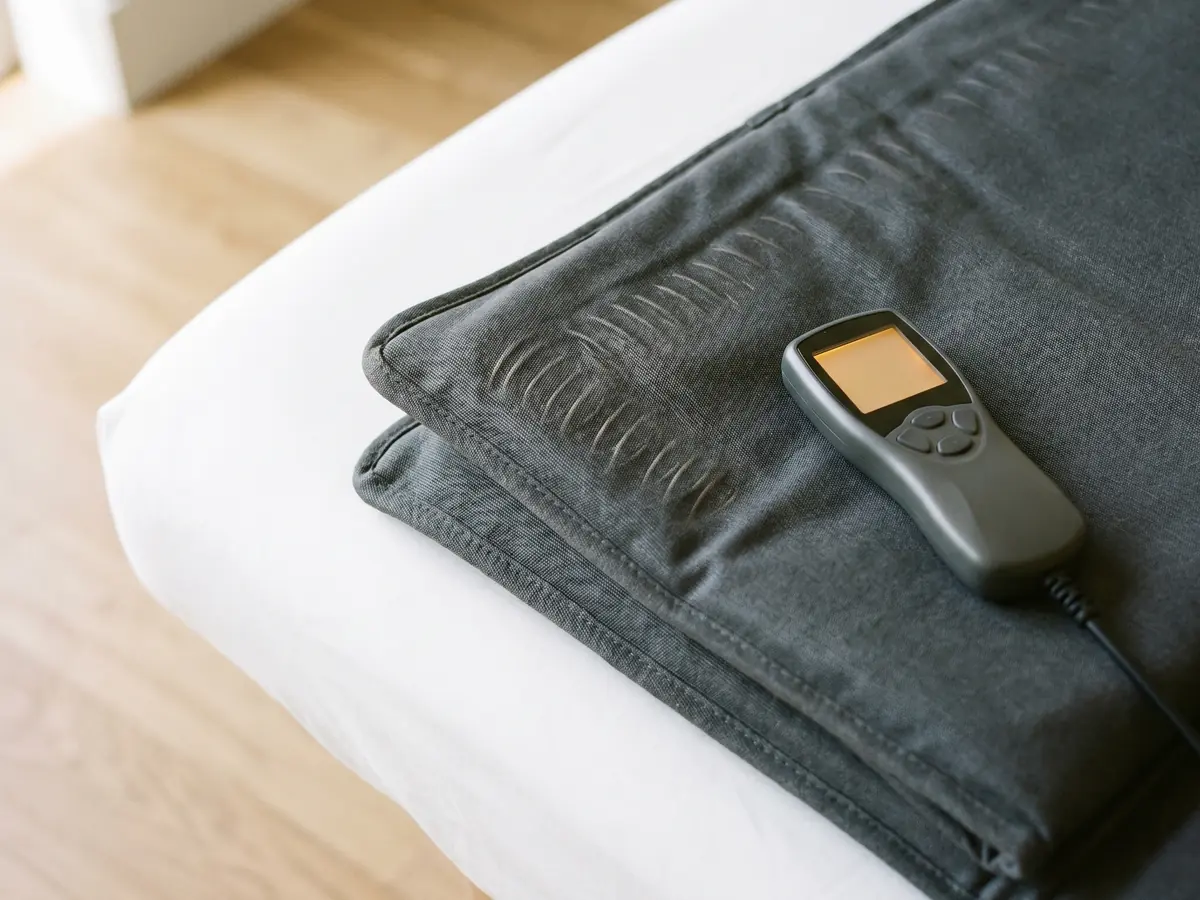
- PEMF (pulsed electromagnetic field) therapy applies low-frequency pulsed magnetic fields to the body — usually via a full-body mat, a localized pad, or a high-intensity ring. The fields induce small electrical currents in tissue, which act on ion channels in cell membranes.
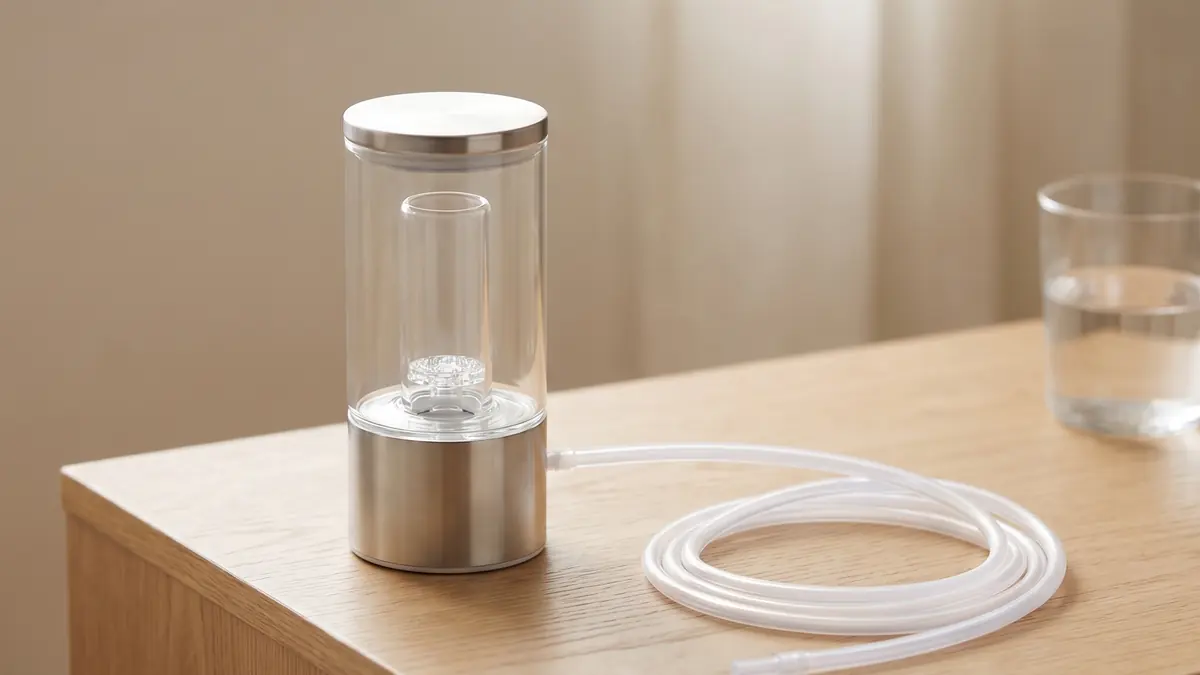
- Molecular hydrogen (H₂) therapy delivers hydrogen gas — typically at 2–4% concentration in inhaled air, or dissolved in drinking water — into the body, where H₂ acts as a selective antioxidant.
The two are mechanistically unrelated. They are stacked because their proposed effects are complementary: PEMF acts on cellular signaling and ion movement, hydrogen acts on the redox environment those cells operate in. Whether the stack outperforms either modality alone is a separate question, and the published literature is honest about it: there is no head-to-head trial of the combined protocol. We say so up front.
How PEMF works — and where the evidence is
PEMF devices generate pulsed magnetic fields, usually in the extremely low-frequency (ELF) range of 1–300 Hz. Those fields induce small eddy currents in tissue (Faraday induction), which modulate the activity of voltage-gated ion channels — calcium channels in particular — and influence intracellular signaling cascades. The mechanism is well-characterized; the clinical question is which downstream effects are actually reproducible.
Strong evidence
- Bone fracture nonunion healing. The original FDA clearance for PEMF (1979) was for stimulating healing in long-bone fractures that had failed to unite. The orthopedic literature on this application is substantial and consistent.
- Knee osteoarthritis pain and function. A 2009 meta-analysis of randomized controlled trials reported small-to-moderate improvements in pain and function scores with PEMF in knee OA, though clinical magnitude varies by device and protocol.
- Post-surgical edema and pain in plastic surgery. A clinical evidence review documents reduced post-operative pain and edema with adjunctive PEMF.
Moderate evidence
- Chronic musculoskeletal pain outside of OA — heterogeneous trials with mixed effect sizes.
- Diabetic foot ulcer and wound healing as an adjunct — encouraging signal in smaller trials, not yet a standard of care.
- Soft-tissue inflammation markers after acute injury, in animal and small human studies.
Weak or marketing-only claims
- "Boosts ATP" or "increases cellular energy" as a generic whole-body effect. The mitochondrial and signaling research is real, but the leap to "more energy" or "more stamina" is not supported by controlled trials.
- Whole-body sleep improvement, mood lift, or cognitive enhancement. A systematic review of whole-body PEMF devices concluded that high-quality evidence for these endpoints is limited and the effects, where present, are modest.
- "Detoxification." No defensible mechanism or controlled outcome data.
None of this is a reason to dismiss PEMF — the strong-evidence applications are well-established and the modality is exceptionally well-tolerated. But the gap between what the literature supports and how some manufacturers market their devices is wide, and we'd rather you know that going in.
How molecular hydrogen works — and where the evidence is
Molecular hydrogen (H₂) is the smallest molecule in the universe. It diffuses freely across cell membranes and even into mitochondria. The therapeutic interest started with a 2007 paper in Nature Medicine by Ohsawa and colleagues, who showed that inhaled H₂ at low concentration selectively reduces the most cytotoxic reactive oxygen species — the hydroxyl radical (•OH) and peroxynitrite (ONOO⁻) — without affecting hydrogen peroxide and superoxide, which carry useful signaling functions.
That selective antioxidant behavior is what differentiates H₂ from generic antioxidant supplements, which often blunt physiologic redox signaling along with the harmful species. The downstream literature has grown to over a thousand papers and is summarized in a comprehensive review of 321 original articles.
Strong evidence
- Post-cardiac-arrest neurological outcomes. The HYBRID II multicenter randomized trial reported improved 90-day neurological outcomes with inhaled hydrogen during post-cardiac-arrest care — the most rigorous human evidence for inhaled H₂ to date.
- Excellent safety profile across hundreds of clinical and translational studies, at the inhalation concentrations used (well below the 4% lower flammability limit for hydrogen-air mixtures).
- Mechanistic plausibility for redox-driven conditions, summarized in Ohta's pharmacology review.
Moderate evidence
- Metabolic syndrome biomarkers. A 24-week randomized trial of hydrogen-rich water reported improvements in body composition, lipid profiles, and inflammation markers in adults with metabolic syndrome.
- Exercise-induced fatigue and inflammation in small RCTs of athletes using hydrogen-rich water before training.
- Post-COVID recovery in early RCTs of hydrogen inhalation — preliminary, not yet a standard recommendation.
Weak or premature claims
- "Cures" oxidative-stress-driven chronic disease. Mechanistic plausibility is not the same as RCT-grade outcome data, and the strongest claims in this category are still ahead of the evidence.
- Generic "anti-aging" or longevity outcomes in healthy people. Plausible from mechanism, not yet demonstrated in controlled human trials with hard endpoints.
- Whole-body cancer prevention. Animal data exist; human prevention trials do not.
The case for stacking the two — honestly
This is the section most online content about "PEMF + hydrogen" gets wrong. The case for the stack is mechanistic, not experimental.
What the stack is built on: PEMF stimulates cellular signaling and mitochondrial activity. Activated mitochondria transiently produce reactive oxygen species as a by-product of normal energy metabolism. Some of those species — superoxide and hydrogen peroxide — are useful signaling molecules. Others — the hydroxyl radical and peroxynitrite — are damaging, and their accumulation is the mechanistic basis for "oxidative stress." Molecular hydrogen selectively neutralizes the damaging ones without blunting the signaling ones.
On paper, that pairing is rational: a stimulus that turns up cellular activity, alongside a gas that selectively removes the harmful by-products of that activity. In the room, members report that the combination feels different from either modality alone — usually as deeper relaxation during the session and clearer post-session sleep. We treat that as a useful subjective signal, not a clinical endpoint.
What the stack is not built on: a published head-to-head trial. There is no large RCT of PEMF + hydrogen versus PEMF alone, hydrogen alone, or sham. The strongest evidence for the combination, today, is the strong evidence for each modality individually, plus mechanistic plausibility for combining them. We will tell you that to your face.
That honesty is the point of running the stack at all. If you want a defensible recovery and longevity protocol, the building blocks need to be modalities with their own published evidence. PEMF and hydrogen each clear that bar. Stacking them is a reasonable use of the time you are already spending, not a magic bullet.
Protocol: how we run the stack at BMS
The protocol is simple by design. We run hydrogen inhalation throughout, and PEMF as the layered second modality.
Sequence
- Hydrogen first, by 5 minutes. Members are fitted with a clean nasal cannula and the hydrogen inhaler starts. We start hydrogen ahead of PEMF so the cellular environment is already in a hydrogen-saturated state when PEMF begins, on the same theoretical basis as the source-paper rationale: H₂ saturates blood and tissues quickly via inhalation, so a 5-minute head start is enough.
- PEMF mat or pad on, intensity to goal. Members lie down with hydrogen still flowing. PEMF intensity ramps over 2–3 minutes. For sleep, recovery, or general longevity goals we run a sub-perceptual ELF protocol; for localized soreness or post-training stiffness we run a higher-intensity, focal protocol on a pad.
- Both run together for 20–60 minutes. Hydrogen and PEMF run in parallel for the bulk of the session. There is nothing to do; members rest, read, or sleep.
- Both ramp down, member rehydrates. No downtime. Members drive themselves home, return to work, or stack other recovery modalities the same day.
Frequency
For recovery and longevity goals, two to three sessions per week is the most common cadence. Members on an active training block sometimes go up to four sessions, particularly when stacking PEMF + hydrogen on hard training days. There is no convincing dose-response evidence above three to four sessions per week for either modality, so we do not push higher unless the indication warrants it.

Who should not do PEMF or hydrogen
The contraindication lists are short but matter. Both are screened at intake.
PEMF — absolute contraindications (do not treat):
- Implanted electronic devices: pacemakers, implanted defibrillators, neurostimulators, drug-delivery pumps, cochlear implants
- Pregnancy
- Active hemorrhagic conditions or bleeding disorders
- Active seizure disorder (until cleared by neurology)
PEMF — relative contraindications (clear with your physician first):
- Active malignancy in the treatment area
- Recent surgery in the treatment area
- Metal implants in the treatment area (case-by-case, depending on intensity tier)
- Anticoagulant therapy with INR outside the target range
Hydrogen inhalation — absolute contraindications:
- Active reliance on medical oxygen therapy without prior physician sign-off
- Pregnancy (until cleared by an obstetric provider)
Hydrogen inhalation — relative contraindications (discuss with your physician):
- Severe COPD or interstitial lung disease
- Recent pneumothorax
- Active upper respiratory infection (out of courtesy to other members and our equipment, we generally reschedule)
If something on either list applies, we say so before scheduling and recommend an alternative path or a physician sign-off before we run the protocol.
Stacking with the rest of the recovery suite
PEMF and hydrogen layer cleanly with the rest of our recovery work. The most common same-day combinations members request:
- PEMF + hydrogen + red light therapy. Red light immediately before or after the PEMF-hydrogen block adds another low-intensity, well-tolerated layer with its own published evidence base for skin and superficial soft-tissue endpoints.
- PEMF + hydrogen + hyperbaric oxygen therapy. HBOT and PEMF are run sequentially, not simultaneously. Hydrogen can run during either. Members on a longevity-focused track sometimes alternate HBOT-week with PEMF-hydrogen-week.
- PEMF + hydrogen on the day of Emsculpt NEO. PEMF after Emsculpt NEO is genuinely pleasant and supports recovery from the high-contraction load. Hydrogen runs in the background without interfering. Stack PEMF-hydrogen second, after the Emsculpt NEO session.
- PEMF + hydrogen on rest days from contrast therapy. Contrast therapy is a different physiology — vascular pumping and autonomic switching — and runs better on its own day. Members alternate contrast days with PEMF-hydrogen days.
PEMF and hydrogen therapy in San Jose: what we run at BMS Wellness
Our PEMF therapy program at the Santa Clara studio runs on full-body mats and localized pads, with intensity selected at intake based on goal — sub-perceptual for sleep and longevity, low-perceptual for general recovery, and focal higher-intensity for post-training soreness. Sessions typically run 20–60 minutes.
Our molecular hydrogen therapy uses clinical-grade inhalation units producing therapeutic concentrations of H₂ via nasal cannula. Sessions run 30–60 minutes. Distilled water is the only consumable. Members can also pair sessions with hydrogen-infused water at home for daily exposure outside of clinic visits.
What we do at intake:
- Goal alignment. Recovery, longevity, sleep support, post-training, or post-procedure recovery. The goal selects the intensity tier and total session length.
- Contraindication screening. The full lists above, with a short conversation about implants, pregnancy, anticoagulants, and respiratory history.
- Realistic expectation setting. What two to three weeks of stacked sessions typically produces, what they do not produce, and what to track.
- Stack planning. If PEMF-hydrogen is part of a broader recovery plan with red light, HBOT, or contrast therapy, we sequence it across the week so each modality lands at the right time.
The PEMF-hydrogen suite sits inside the same studio that houses red light therapy, hyperbaric oxygen therapy, cold plunge, and dry sauna. Membership options include PEMF and hydrogen access; single sessions are available without a membership.
Common mistakes (and how to fix them)
1. Treating "more intensity" as "more benefit"
For ELF whole-body PEMF, sub-perceptual intensities have the same published-evidence basis as higher-intensity systems for most longevity and recovery applications. Higher intensity is appropriate for localized post-training soreness or chronic pain in a defined area, not for general wellness.
2. Reading manufacturer marketing as clinical evidence
If a claim is not backed by a citation in PubMed, treat it as a claim, not a finding. This applies to both modalities — PEMF marketing tends to overshoot on whole-body cellular claims, and hydrogen marketing tends to overshoot on disease-prevention claims.
3. Skipping the contraindication conversation
The pacemaker and pregnancy lines on the PEMF list are non-negotiable. We screen for them at intake, but if you have a relative or friend recommending PEMF therapy, please make sure they have asked you about implanted devices first.
4. Running the stack only once or twice
Both modalities are dose-dependent over weeks of consistent exposure. Members who do two or three sessions and conclude "nothing happened" have not given the protocol a fair test. The published longevity-relevant trials run for weeks to months, not days.
The bottom line
PEMF and molecular hydrogen are two of the better-studied non-pharmacologic recovery modalities available outside a hospital, with FDA clearances and published trial evidence each can stand on independently. Stacking them is mechanistically rational and well-tolerated. It is not a substitute for sleep, training, nutrition, or a medical workup when one is needed.
The honest version of "PEMF + hydrogen" is: each modality has an evidence base; the combined stack does not (yet) have a head-to-head trial; the case for the combination is mechanistic; and the protocol is exceptionally low-risk. That is enough reason to run it as a layer inside a broader longevity and recovery plan, and not enough reason to treat it as a stand-alone fix.
If you are considering PEMF, hydrogen, or the combined stack in the South Bay and want a candid conversation about whether it fits your situation, our team at the studio offers free 15-minute consultations. We will walk through the evidence for your specific goal, screen for contraindications, and tell you if a different starting point makes more sense — book a consultation to get on the schedule.